RBL30 大鼠嗜碱性粒细胞白血病细胞株 BioVector® RBL30 Rat Basophilic Leukemia Cell Line
- 价 格:¥99860
- 货 号:BioVector® RBL30
- 产 地:北京
- BioVector NTCC典型培养物保藏中心
- 联系人:Dr.Xu, Biovector NTCC Inc.
电话:400-800-2947 工作微信:1843439339 (QQ同号)
邮件:Biovector@163.com
手机:18901268599
地址:北京
- 已注册
BioVector® RBL30 大鼠嗜碱性粒细胞白血病细胞株
BioVector® RBL30 Rat Basophilic Leukemia Cell Line
第一部分 中文说明
一 产品基本信息与遗传学背景
细胞名称:BioVector® RBL30
保藏机构货号:DSMZ ACC 945
物种来源:大鼠 (Rattus norvegicus)
组织与疾病背景:该细胞株建立于大鼠高分化型嗜碱性粒细胞白血病(Rat Basophilic Leukemia)病理模型。该谱系是研究肥大细胞(Mast cell)与嗜碱性粒细胞(Basophil)生物学特征的核心经典体外模型。
核心致癌与受体特征:
高表达高亲和力 IgE 受体(Fc epsilon RI):作为免疫学经典株,该细胞株表面稳定且高度富集表达高亲和力 IgE 跨膜受体复合物。
经典脱颗粒反应活性:受体与特异性 IgE 抗体结合并受到相应抗原交叉联结刺激后,能够触发强烈的细胞内信号级联放大,导致细胞内分泌颗粒极速向细胞膜表面锚定、融合并释放组胺(Histamine)、白三烯等趋化介质,同时伴有高水平的 beta-己糖苷酶(beta-hexosaminidase)的胞外外排反应。
生物安全级别:1级(BSL-1)。
二 细胞形态学与培养环境
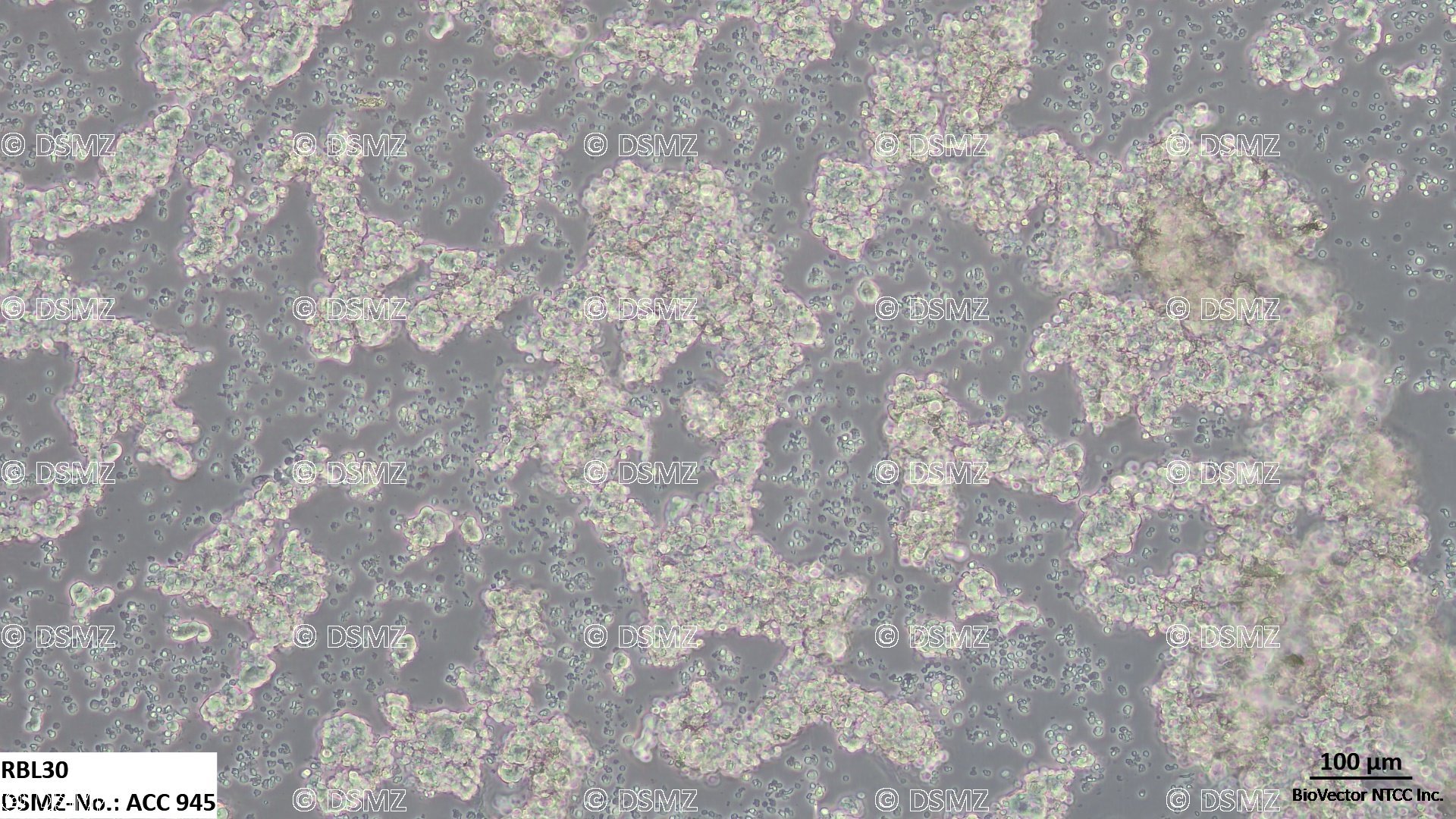
形态学特征:展现典型的成纤维细胞样、多角形或不规则圆形混合的肥大细胞/嗜碱性粒细胞样特征。
生长模式:贴壁生长(Adherent growth)。部分处于分裂期的细胞可能会短暂变圆、松散或呈现半悬浮状态,属于正常生理现象。
群体倍增时间(Doubling Time):大约 24 至 36 小时,进入对数期后增殖能力极强。
标准完全培养基配方:
基础培养基:80% 至 90% BioVector® 优质高糖 DMEM 培养基(或依据实验选择专用基础培养基)。
维持添加:10% 至 20% 优质胎牛血清(FBS,通常建议采用热灭活处理以最大程度排除补体对免疫活性细胞的干扰)。
1% Penicillin-Streptomycin 双抗溶液。
物理培养参数:37摄氏度恒温、5% 二氧化碳、空气饱和湿度。
三 细胞传代与复苏标准操作步骤
初始接种与日常传代操作(Subculturing Protocol):
日常传代:由于该细胞主要以贴壁形式生长,传代时需采用常规的胰酶消化法。
消化操作:吸除旧培养基,使用无钙镁离子的无菌 PBS 润洗细胞层一次。加入适量 0.25% Trypsin-EDTA 消化液置于 37摄氏度箱内消化 1 到 3 分钟。当显微镜下观察到大部分细胞变圆并开始收缩、部分松动时,立即加入含有血清的完全培养基终止消化。
传代参数:轻轻吹打贴壁细胞使其脱落并重悬均匀,常规传代稀释比例为 1比3 至 1比6,每 2 到 3 天常规传代一次。切勿让细胞生长的过于饱和(融合成片超过 90% 以上),否则会导致其分化特征及过敏介质释放能力出现不可逆的退化。
冻存细胞复苏:
快速将冻存管自液氮罐中取出,移入 37 摄氏度 BioVector® 水浴锅中持续高频摇晃解冻,在 1 到 2 分钟内令其极速融化。
将解冻的细胞液缓慢移入含有 5 毫升 预热完全培养基的无菌离心管中,以 150 g 离心 5 分钟。
彻底吸除含有 DMSO 冻存液的上清,使用新鲜的完全培养基轻轻重悬细胞沉淀,接种于培养瓶中,置于 37摄氏度、5% 二氧化碳箱内培养。
四 核心科研应用方向
1型超敏反应与过敏性发病机制研究:BioVector® RBL30 是体外研究 1 型超敏反应(IgE 介导的过敏反应)国际公认的经典核心底物。用于深入解析 IgE 诱导的 Fc epsilon RI 受体交联、下游酪氨酸激酶(如 Syk、Lyn)激活以及肥大细胞活化级联信号。
抗过敏药物、中草药提取物与天然产物高通量体外筛选:该细胞株被广泛用于评价新型肥大细胞稳定剂、组胺受体拮抗剂、过敏介质释放抑制剂的药效。通过体外定量测定其受刺激后脱颗粒释放的 beta-己糖苷酶、组胺或白三烯的水平,来精确评估测试药物的抗炎及抗过敏生物学效能。
新型免疫佐剂、变应原(Allergen)鉴定与环境毒理学筛查:常用于检测食物、化妆品原料或环境致敏原的过敏原性(Allergenicity)安全评价。通过暴露于测试组分,观察并量化 RBL30 细胞的激活和脱颗粒反应,为新型制剂的生物相容性提供关键数据支撑。
PART 2 ENGLISH SECTION
I General Information and Genetic Background
Cell Line Name: BioVector® RBL30
Repository Catalog Number: DSMZ ACC 945
Species Origin: Rat (Rattus norvegicus)
Tissue and Disease Background: Established as a definitive in vitro lineage model derived from highly differentiated rat basophilic leukemia. This lineage serves as a premier reference standard for investigating mast cell and basophil functional biology.
Core Receptor & Degranulation Traits:
High-Affinity IgE Receptor Expression (Fc epsilon RI): As a hallmark immunopharmacological line, the cell membrane characteristically hyper-expresses functional high-affinity transmembrane IgE receptor complexes.
Classical Degranulation Responsiveness: Cross-linking of the receptor-bound specific IgE molecules with cognate antigens sparks a robust intracellular signaling cascade. This triggers rapid docking and fusion of secretory granules with the plasma membrane, causing immediate exocytosis of histamine, leukotrienes, and high baseline levels of beta-hexosaminidase.
Biosafety Level: BSL-1.
II Morphological Attributes and Cultivation Media
Morphology: Exhibits a mixed fibroblastic-like, polygonal, or irregularly rounded architecture typical of differentiated basophilic leukemic variants.
Growth Mode: Adherent growth. Cells in active mitotic phases may temporarily rounded up, display reduced attachment, or appear semi-suspended, which represents normal physiologic behaviors.
Population Doubling Time: Approximately 24 to 36 hours, expanding vigorously during logarithmic growth phases.
Standard Complete Growth Medium Formulation:
Basal Medium: 80% to 90% premium BioVector® High-Glucose DMEM medium (or specialized basal media depending on designated assay parameters).
Routine Supplements: 10% to 20% premium Fetal Bovine Serum (FBS; heat inactivation at 56 degrees Celsius for 30 minutes is commonly suggested to exclude potential complement interference in immunological assays).
1% Penicillin-Streptomycin solution.
Physical Incubation Parameters: Maintained continuously at 37 degrees Celsius under a humidified atmosphere of 5% Carbon Dioxide.
III Subculturing and Thawing Protocols
Routine Passaging Schedule:
Subculturing Routine: Since cells expand primarily as an adherent monolayer, regular dissociation utilizes standard enzymatic trypsinization protocols.
Dissociation Execution: Aspirate spent culture medium and rinse the cell layer once with sterile, calcium- and magnesium-free PBS. Dispense an appropriate volume of 0.25% Trypsin-EDTA solution and incubate at 37 degrees Celsius for 1 to 3 minutes. As soon as inverted microscopy reveals cells rounding up, shrinking, and detaching, instantly introduce complete growth medium containing serum to neutralize the enzyme.
Passaging Parameters: Gently pipette the cell suspension to achieve uniform dispersal and subculture into new vessels at recommended split sequence ratios between 1:3 and 1:6 every 2 to 3 days. Avoid letting cultures reach complete over-confluence (beyond 90% surface saturation), as overcrowding can provoke an irreversible loss of degranulation efficiencies and marker presentation profiles.
Cryovial Thawing and Recovery:
Retrieve the cryovial from cryogenic storage parameters and plunge it into a 37 degrees Celsius BioVector® water bath with continuous rapid manual agitation, achieving complete liquefaction within 1 to 2 minutes.
Transfer the cell slurry slowly into a sterile centrifuge tube carrying 5 mL of pre-warmed complete growth medium and spin at 150 g for 5 minutes.
Decant the supernatant completely to clear out toxic residual DMSO traces, and gently resuspend the cell pellet in fresh complete growth medium before plating into standard cultivation vessels.
IV Strategic Research Applications
Mapping Type I Hypersensitivity and Allergy Pathogenesis: BioVector® RBL30 represents a globally acknowledged, indispensable baseline model for dissecting IgE-mediated Type I hypersensitivity pathways in vitro. It is heavily utilized to trace Fc epsilon RI receptor cross-linking networks and downstream tyrosine kinase (e.g., Syk, Lyn) signaling activation loop topologies.
High-Throughput Screening of Anti-Allergic Small-Molecules, Natural Products, and Botanicals: This cell line is deployed as an optimized screening assay to discover novel mast cell stabilizers, histamine antagonists, or inhibitors of allergic mediator release. By precisely measuring extracellular ejections of beta-hexosaminidase, histamine, or leukotriene post-stimulation, researchers can accurately quantify anti-inflammatory and anti-allergic potential.
Allergenicity Profiling, Adjuvant Assessment, and Environmental Toxicological Testing: Frequently utilized to gauge the allergenic potentials of novel foodstuffs, cosmetic raw elements, or industrial chemical pollutants. Exposing RBL30 cells to suspicious compounds allows investigators to monitor and index degranulation scales, yielding crucial cytocompatibility and safety indicators for candidate formulations.
BioVector NTCC质粒载体菌株细胞蛋白抗体基因保藏中心
电话:400-800-2947
工作QQ/微信同号:1843439339
网址http://www.biovector.net
- 公告/新闻